Concrete Driveway Maintenance Tips for Cartersville Homeowners
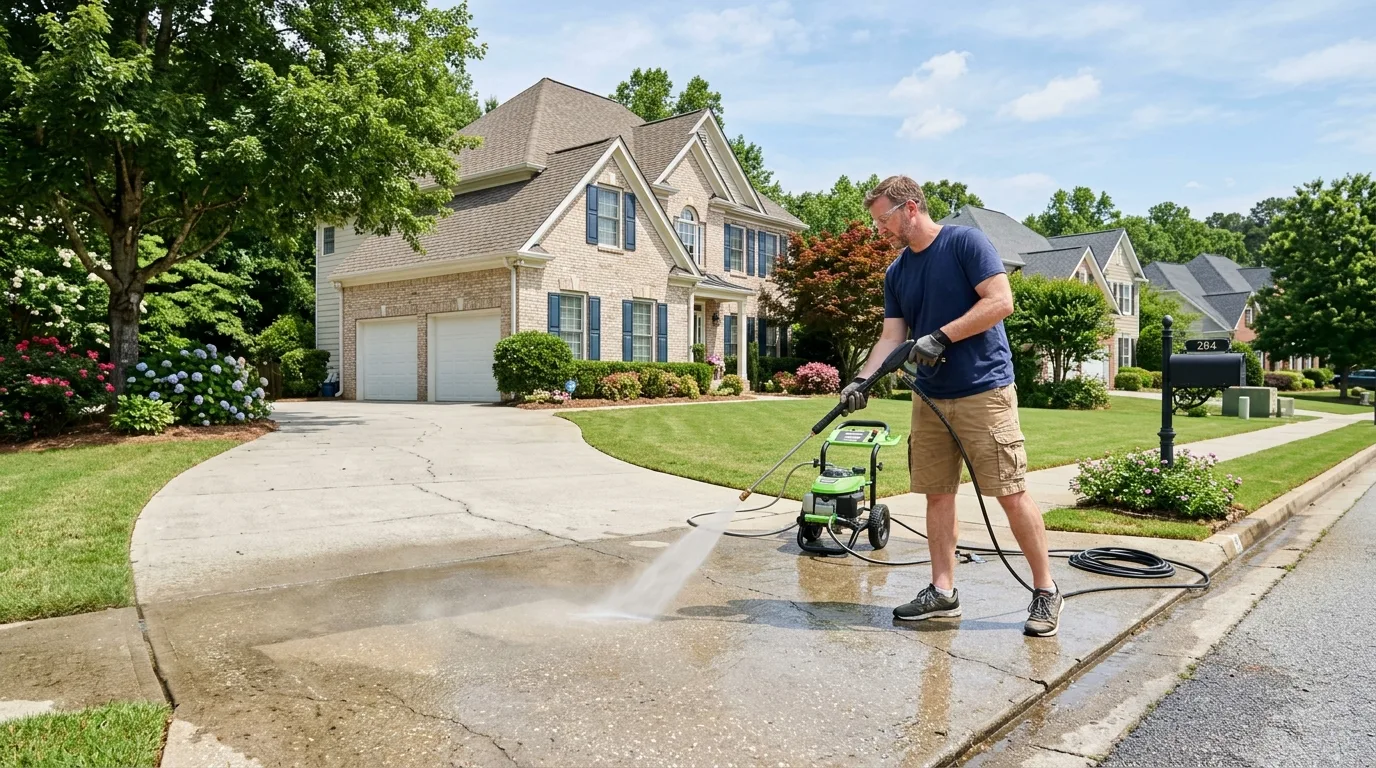
A properly maintained concrete driveway in Cartersville can last 30–40 years. A neglected one deteriorates in 10–15. The difference isn’t the concrete — it’s the maintenance. And the most important insight for Bartow County homeowners is that concrete driveway maintenance in Georgia looks different from what national guides recommend, because Cartersville’s red clay soil, summer heat, and winter freeze-thaw cycles create specific failure modes that routine maintenance directly prevents. In this post, we cover the concrete driveway maintenance schedule that maximizes lifespan for Cartersville properties, what to watch for each season, and when repair becomes necessary.
Is Your Cartersville Driveway Due for Service?
We assess, seal, and repair concrete driveways throughout Bartow County. Free estimates at (888) 376-0955.
The Most Important Maintenance Task: Sealing Your Concrete Driveway
Sealing is the single highest-return maintenance task for a concrete driveway in Cartersville. A penetrating concrete sealer applied every 3–5 years does three critical things for Bartow County driveways:
Blocks moisture infiltration. Water entering unsealed concrete through the surface is the primary driver of freeze-thaw damage in Cartersville’s winter months. When temperatures drop below 32°F from November through March, water in the concrete pores expands as it freezes, fracturing the cement paste microstructure. The visible result is surface scaling — the pitted, flaky surface texture seen on older unsealed driveways throughout Oak Grove and West Cartersville neighborhoods after a harsh winter. Sealing prevents this cycle by drastically reducing the water that can infiltrate the surface.
Protects against chemical damage. Oil drips, gasoline, and road salt that enter Georgia on vehicles from northern states all penetrate and degrade unsealed concrete surfaces. A quality sealer creates a barrier that keeps these chemicals at the surface where they can be washed away rather than absorbed.
Slows UV-driven surface wear. Georgia’s intense summer sun breaks down the cement paste at the concrete surface through UV exposure. Sealing doesn’t eliminate UV exposure but significantly slows the rate of surface degradation in Cartersville’s extended summer season.
Recommended sealing schedule: Seal your concrete driveway 28–30 days after initial installation (after full cure), then reseal every 3–5 years. Watch for sealer wear signs: water no longer beads on the surface, the concrete has a dull flat appearance rather than a slight sheen, or the surface shows fine surface dusting when rubbed.
Crack Prevention and Early Repair
The most cost-effective maintenance strategy for concrete driveways in Cartersville is addressing cracks when they are small rather than waiting for them to widen. A hairline crack costs $50–$150 to fill with flexible polyurethane sealant. The same crack, left unfilled through two or three winter freeze-thaw cycles, may widen to 1/4 inch or more and allow sub-base erosion from rainwater infiltration — at that point, the repair may involve mudjacking or partial slab replacement.
Inspect your concrete driveway once each spring — ideally in late March or early April, after Bartow County’s coldest weather has passed. Look for:
- New cracks that weren’t visible the previous fall
- Existing cracks that have widened since last inspection
- Surface scaling — small areas of surface concrete detaching in flakes
- Section settlement — is any section of the driveway lower than adjacent sections?
- Edge deterioration — the perimeter of the slab is the most vulnerable area for moisture infiltration
If any of these conditions are present, addressing them before summer helps prevent rain-season water infiltration from making the problem worse. See our full guide on concrete repair in Cartersville for repair-vs-replace guidance.
Drainage Management: The Underrated Maintenance Factor
More concrete driveways in Cartersville fail due to poor drainage than any other single cause. Red clay soil holds water, and water that pools against or beneath a concrete driveway drives the sub-base moisture cycling that produces cracking and heaving over time.
Twice-yearly drainage checks are a simple, high-value maintenance task:
- After heavy rain: Walk the perimeter and observe where water flows. Does it drain away from the driveway toward the street or a drainage channel? Or does it pool at the edges, in the garage approach, or against the house?
- At the driveway apron: The low point where the driveway meets the street is a common water pooling location. Standing water here after rain indicates inadequate cross-slope on the driveway or blockage of the curb cut drain.
- Along the driveway edges: Water that runs along the edge rather than off it indicates insufficient side slope, which directs moisture against the slab edge over time.
Correcting drainage issues — regrading, extending downspouts, clearing drainage channels — is far less expensive than replacing a driveway that has failed due to chronic moisture against the sub-base. This is especially relevant for Cartersville properties along creek corridors and low-lying areas in neighborhoods like the Emerson Area.
Driveway Maintenance and Repair in Cartersville
We seal, repair, and assess concrete driveways throughout Bartow County. Call (888) 376-0955.
Cleaning Your Concrete Driveway in Cartersville
Regular cleaning prevents staining and surface contamination that can permanently mark unsealed concrete. For Cartersville homeowners, two types of staining are particularly common:
Oil and automotive fluid stains. Treat fresh oil spills immediately with cat litter or sawdust to absorb the fluid before it penetrates. For set stains, a degreaser formulated for concrete applied before pressure washing is effective on most oil and transmission fluid marks.
Biological staining. Georgia’s humid climate creates conditions where mold, mildew, and algae can colonize concrete surfaces, particularly on shaded sections or patios with limited sun exposure. A dilute bleach solution (1:10 bleach to water) kills biological growth and can be rinsed off with a hose. Pressure washing with 2,500–3,000 PSI is appropriate for concrete driveways and patios — avoid using higher pressures that can erode the cement paste surface.
Rust stains. Irrigation systems using untreated well water can leave rust streaks on concrete. Oxalic acid-based concrete cleaners remove these effectively without damaging the surface.
What Not to Do to a Concrete Driveway in Cartersville
A few common maintenance mistakes that accelerate concrete deterioration in Georgia:
- Don’t use rock salt or deicing chlorides. Georgia winters occasionally produce ice, and some homeowners use rock salt. Chloride deicers react with the calcium compounds in concrete, causing surface scaling and deteriorating reinforcement. Use sand for traction or a non-chloride deicer if absolutely needed.
- Don’t allow tree roots to grow beneath the driveway. Bartow County’s oak and maple trees develop extensive root systems that can lift concrete sections from below over time. If trees are planted close to a driveway, root barriers during installation prevent this.
- Don’t defer sealing. Every year that passes without sealing is a year of accelerated surface degradation, especially on Cartersville driveways exposed to summer UV.
Frequently Asked Questions
How often should I seal my concrete driveway in Cartersville?
Every 3–5 years is the standard recommendation for Cartersville driveways. Georgia’s summer UV exposure and winter freeze-thaw cycles wear through sealers faster than in more temperate climates. The practical indicator is water behavior: if water no longer beads on the surface after rain, the sealer has worn through and reapplication is due.
Can I seal my own concrete driveway, or should I hire a professional?
DIY sealing is feasible for homeowners comfortable with surface prep work. The critical steps are thorough cleaning (all dirt, stains, and loose material removed), ensuring the surface is completely dry before application, and using a quality penetrating or film-forming sealer rated for outdoor use in climates with UV exposure. For large driveways or decorative stamped concrete surfaces, professional application with airless sprayer equipment produces more even coverage than roller application.
When is the best time to seal a concrete driveway in Cartersville?
Late spring (May–June) and early fall (September–October) are ideal. Sealer requires temperatures above 50°F for proper adhesion and penetration, and should not be applied on days when temperatures are expected to drop below 40°F within 24 hours of application. Summer sealing is possible but should avoid the hottest part of the day; sealer applied in direct sunlight on very hot surfaces can blister.
Keep Your Cartersville Driveway in Top Condition
Maintenance assessments, sealing, and repair for concrete driveways throughout Bartow County. Call (888) 376-0955.
Related guides: