Best Time to Pour Concrete in Cartersville, GA: A Seasonal Guide
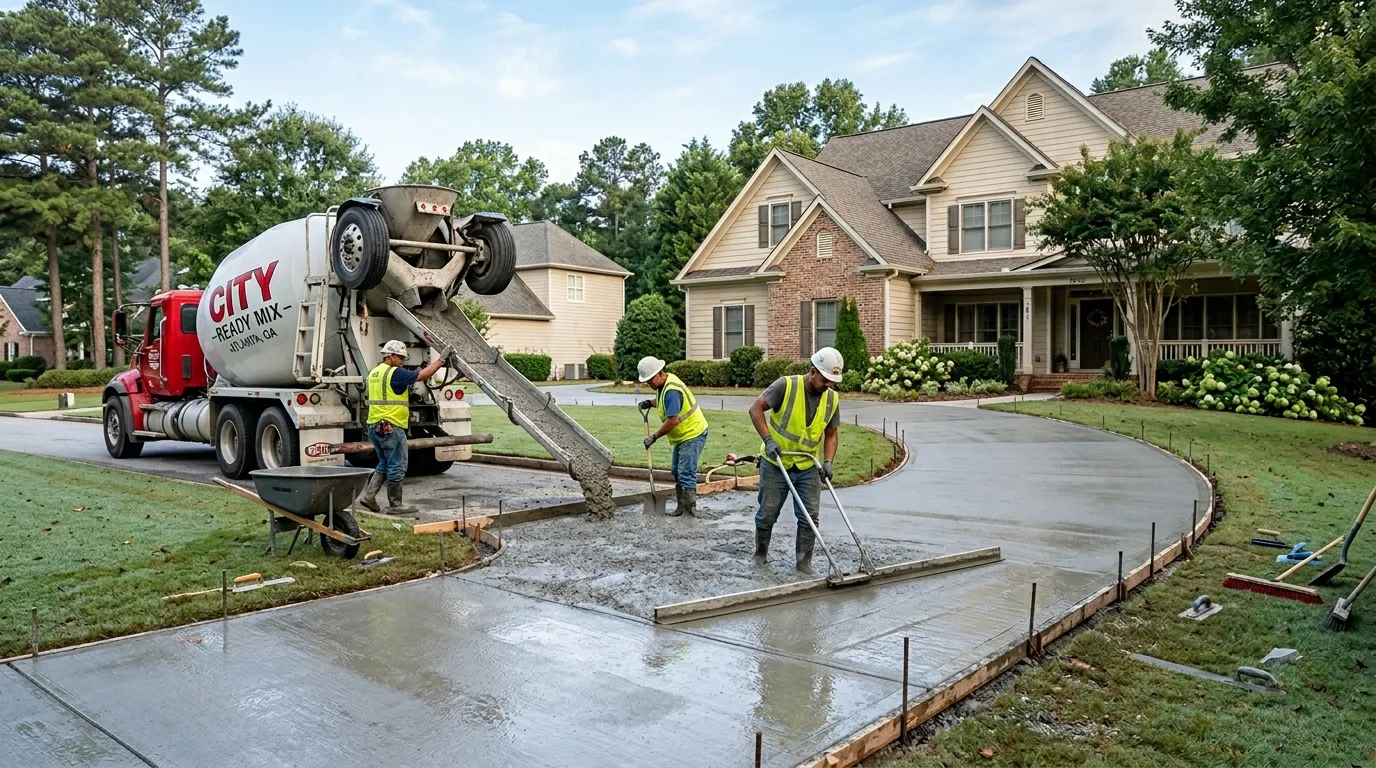
When should you schedule a concrete driveway, patio, or slab project in Cartersville? The answer matters more in Northwest Georgia than in many other parts of the country — Bartow County’s climate creates specific windows where concrete cures optimally and specific periods where extra precautions are required. In this post, we cover the best months for concrete work in Cartersville, the challenges each season presents, and how our team manages concrete pours year-round to ensure quality regardless of when your project is scheduled.
Schedule Your Cartersville Concrete Project
We work year-round with the precautions each season demands. Call (888) 376-0955 for a free estimate.
The Ideal Concrete Season in Cartersville: April–June
Mid-April through mid-June is the optimal window for concrete work in Cartersville. Daytime temperatures in the 70–85°F range, moderate humidity, and longer daylight hours create near-perfect conditions for concrete pouring and curing. The red clay soil in Bartow County is typically near its average moisture content during this period — neither the extreme saturation of late winter nor the drought-dry conditions of August — which means sub-base stability is at its seasonal best.
For stamped concrete patio projects, spring is particularly favorable. The moderate temperatures provide a wider workability window for applying color hardeners and pressing stamp patterns — a comfort margin that shrinks dramatically in summer heat. If you’re planning a decorative concrete project, booking in March for an April or May start is strongly recommended, as spring is the busiest season for residential concrete work in Cartersville.
For concrete driveway installation, spring scheduling also avoids the school-year traffic and scheduling constraints that make summer and fall coordination more complex for many families.
Fall: The Second-Best Window (September–October)
September and October offer conditions nearly as favorable as spring. Post-summer cooling brings temperatures back into the 70–80°F range with declining humidity after the peak of Georgia’s thunderstorm season. These two months represent a reliable, comfortable window for concrete slab installations, driveway replacements, and patio projects.
One practical consideration for fall concrete: afternoon thunderstorms continue through September and into October in Cartersville. We monitor forecasts closely and schedule pours on days with clear windows through the 24-hour cure period after the pour — rain on fresh concrete during the first day can cause surface pitting and finish damage that cannot be repaired without resurfacing.
Fall concrete work often benefits from shorter scheduling queues compared to spring — homeowners who miss the spring rush can often get into the schedule faster in September and October, making fall an underrated window for new projects.
Summer Concrete in Cartersville: Possible with Precautions
Summer is not an ideal season for concrete pouring, but we complete many successful summer projects every year in Cartersville by taking the precautions that hot-weather concreting requires. The challenges are real:
- Average highs in July and August exceed 89°F, with heat indexes regularly above 100°F
- Surface temperatures on concrete forms and existing slab areas can reach 130–140°F on summer afternoons
- High humidity accelerates initial set in some conditions and slows it in others
- Afternoon thunderstorms arrive with little warning between June and September
The mitigation strategies that make summer concrete pours successful include: scheduling pours early in the morning (ideally beginning before 7 AM), using evaporation retarder products to slow surface moisture loss, having additional finishing crew ready to complete the surface work faster, and applying wet burlap or curing compound immediately after finishing to protect the surface during the critical initial cure window.
Stamped concrete patio work in summer is particularly challenging because the narrow window between “too soft to stamp” and “too hard to take a clean impression” compresses in the heat. We recommend scheduling decorative concrete projects in spring or fall if possible, and booking experienced crews for summer stamped work.
We Schedule Around Cartersville's Weather — Not Against It
Every concrete pour is timed and managed for optimal results. Free estimates at (888) 376-0955.
Winter Concrete in Cartersville: The Risk Period
December through February is Cartersville’s most challenging season for concrete work, and the primary reason is freeze-thaw risk. Georgia’s frost depth is approximately 12 inches — relatively shallow compared to northern states, but sufficient to affect fresh concrete poured when temperatures drop below 32°F.
The specific risk is this: fresh concrete that reaches temperatures below 32°F before reaching initial set can freeze internally, and ice crystal formation in unhardened concrete permanently damages the developing microstructure. The result is concrete that appears fine on the surface but has significantly reduced strength — a failure that isn’t visible until the slab begins deteriorating under normal use.
Cartersville’s average winter lows of around 33°F mean that cold nights are common throughout winter, and cold snaps can drive temperatures well below that. We handle winter concrete work with:
- Heated blankets or insulating foam covers applied immediately after the pour
- Accelerating admixtures that shorten the time to initial set
- Water temperature management in the concrete mix
- Avoiding pours when temperatures are forecast to drop below 25°F during the 48-hour initial cure window
Winter is typically our slowest scheduling window, which means faster project start times for homeowners who can tolerate the weather variability. For non-time-sensitive projects, spring or fall remain the better choice.
Month-by-Month Quick Reference for Cartersville
- January–February: Freeze-thaw risk — pour only with cold-weather precautions; expect scheduling flexibility
- March: Improving conditions, spring scheduling begins; book decorative projects early
- April–June: Optimal window — best conditions, busiest schedule
- July–August: Hot-weather precautions required — early morning pours, evaporation retarders; schedule early
- September–October: Second-best window — post-summer cooling, good curing conditions
- November: Cooling temperatures, still workable; monitor forecasts for early freeze events
- December: Increasing freeze risk — cold-weather protocols required for any pour
Frequently Asked Questions
When is the cheapest time to schedule concrete work in Cartersville?
Winter and very early spring (January–March) typically offer the fastest scheduling because demand is lower. Pricing for residential concrete work in Cartersville doesn’t vary seasonally — contractors don’t discount winter work — but you may get earlier project start dates and more scheduling flexibility during slow periods. The tradeoff is that winter work requires more precautions that add modest cost. See our Cartersville concrete cost guide for full pricing details.
Does the type of concrete project affect the best season?
Yes — decorative and stamped concrete work is most season-sensitive. The workability window for pattern stamping is narrower in extreme temperatures (both hot and cold), making spring and fall the strongest recommendation for these projects. Standard driveways and structural slabs are more tolerant of seasonal conditions when proper precautions are taken.
Can concrete be poured in rain in Cartersville?
No — fresh concrete should not be poured in active rain. Rain on unhardened concrete washes out the cement paste, dilutes the water-cement ratio, and causes surface pitting that cannot be repaired without resurfacing. We monitor weather forecasts and will reschedule pours if rain is forecast during the pour window or within 4–6 hours after. Bartow County’s wet seasons (spring and early fall) require close weather monitoring on every project.
Book Your Cartersville Concrete Project for the Right Season
We work with your timeline and take all seasonal precautions on every pour. Call (888) 376-0955.
Related guides: